
A Captain from Portugal
Guy de Cointet
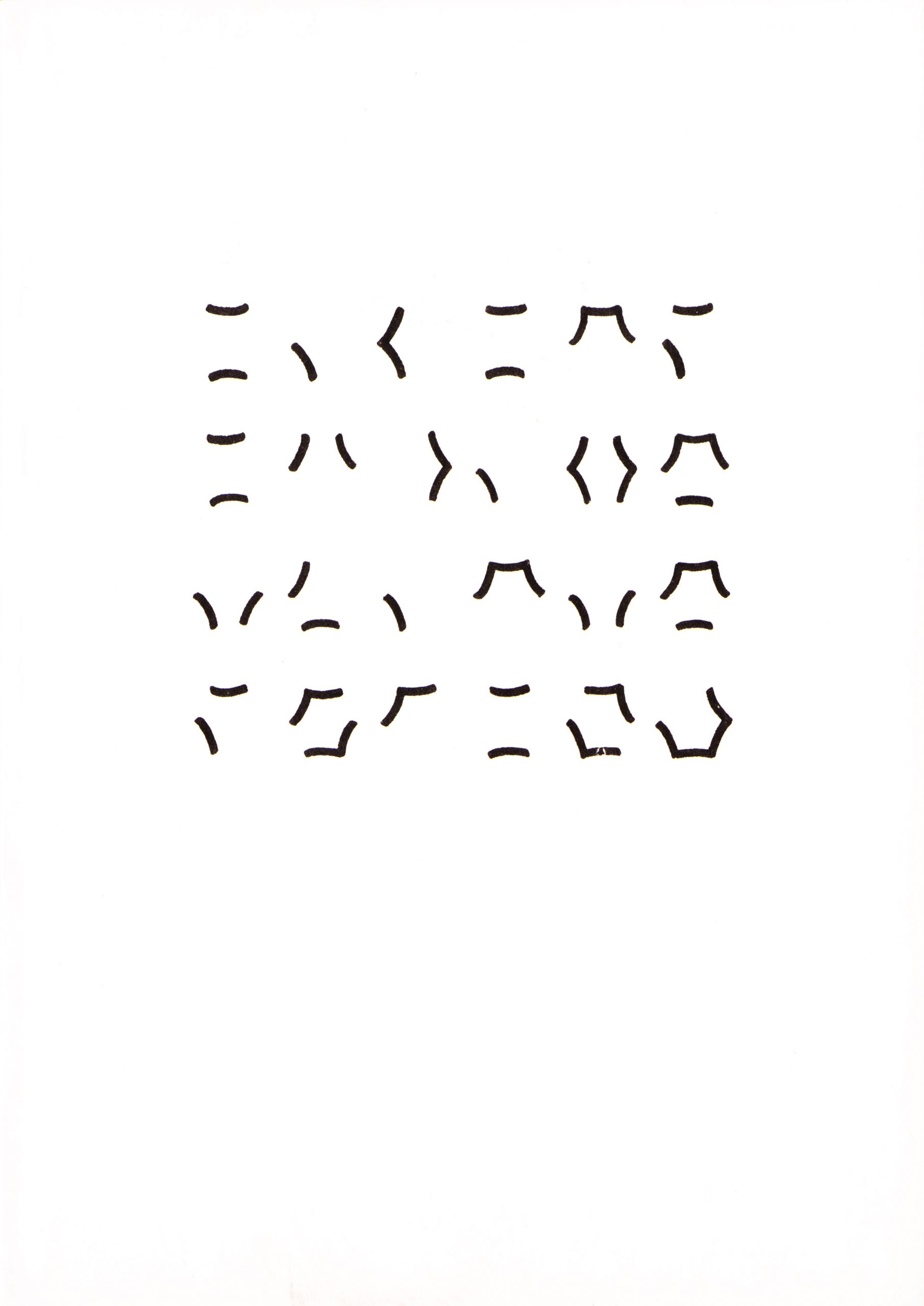
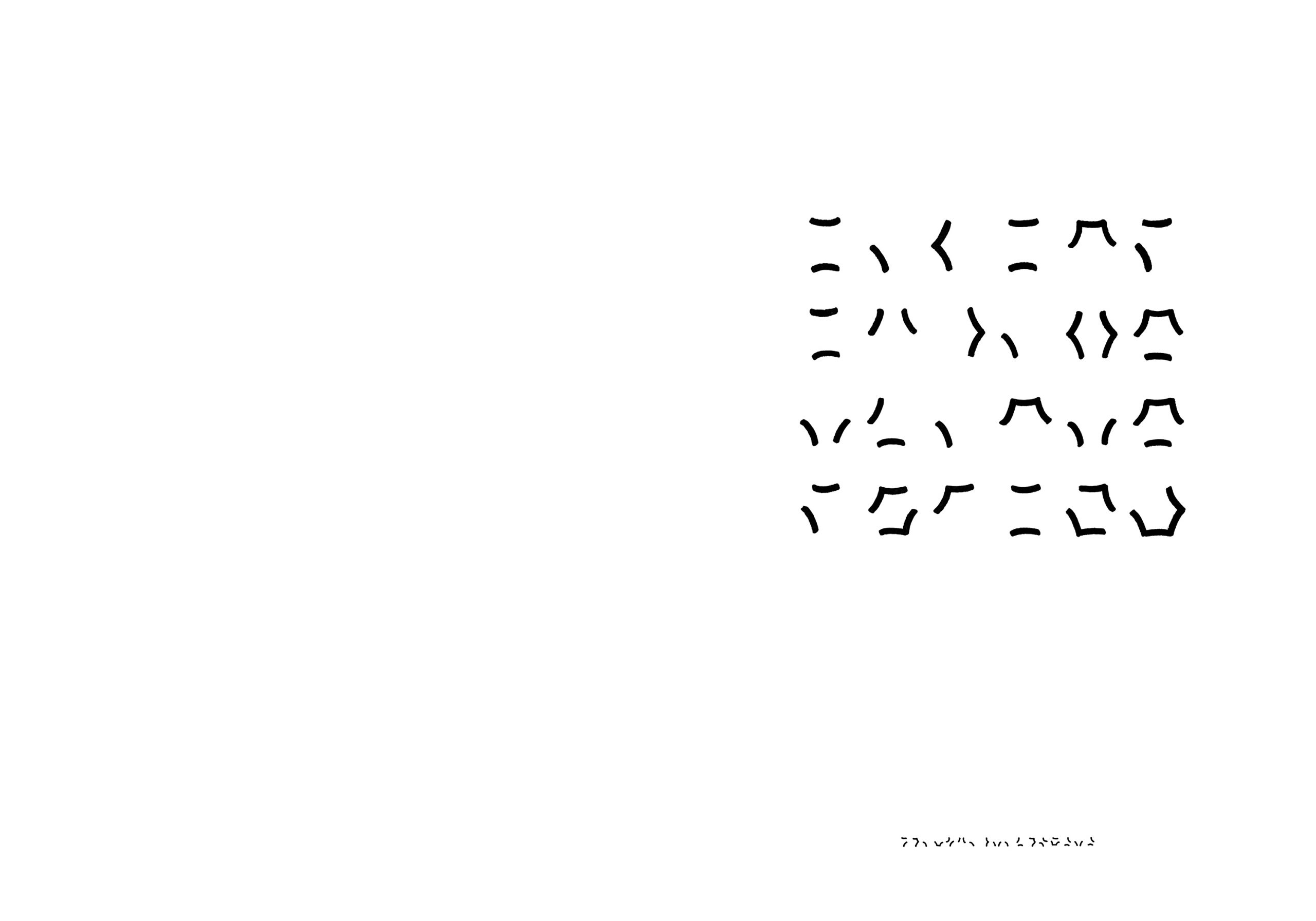
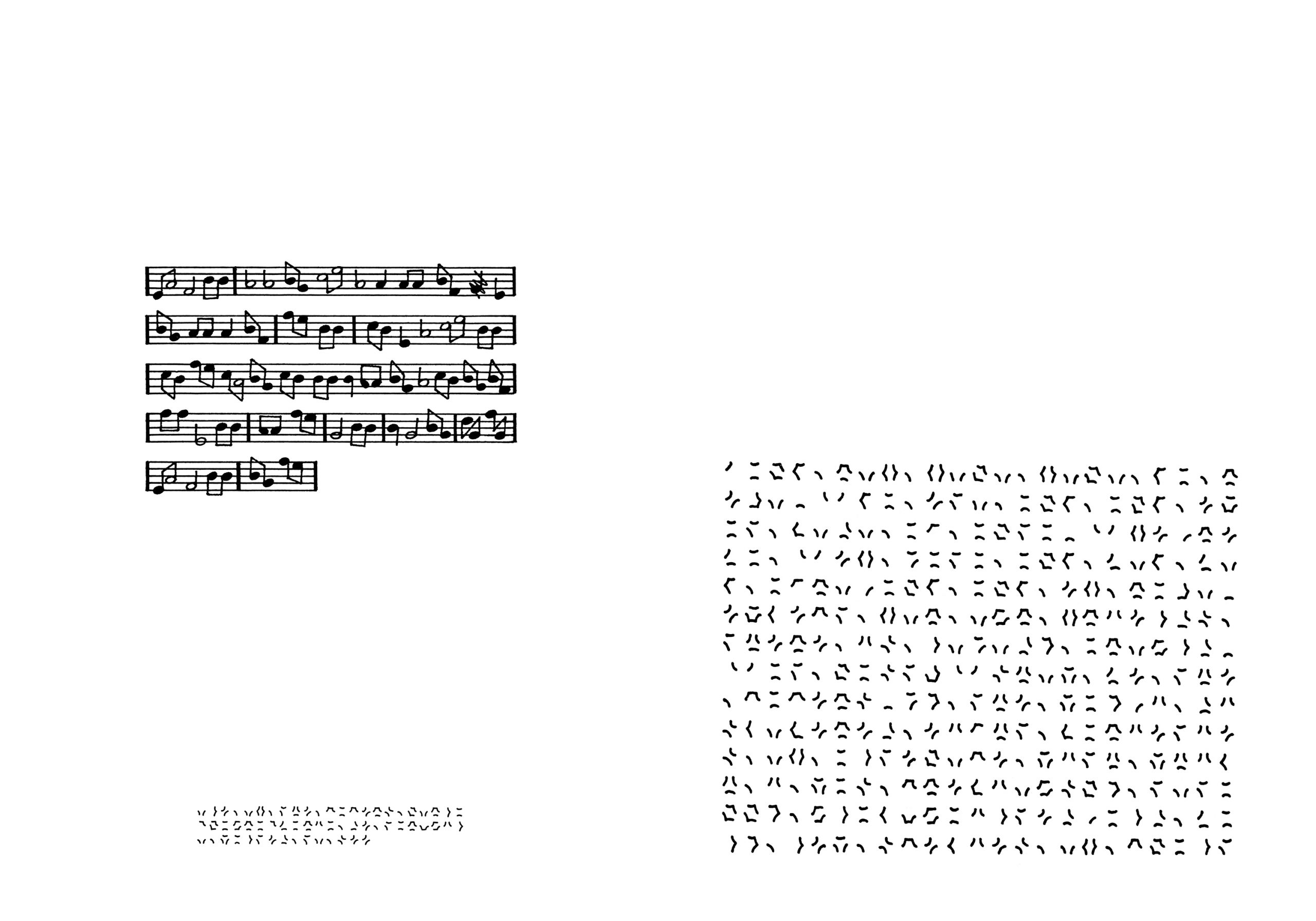
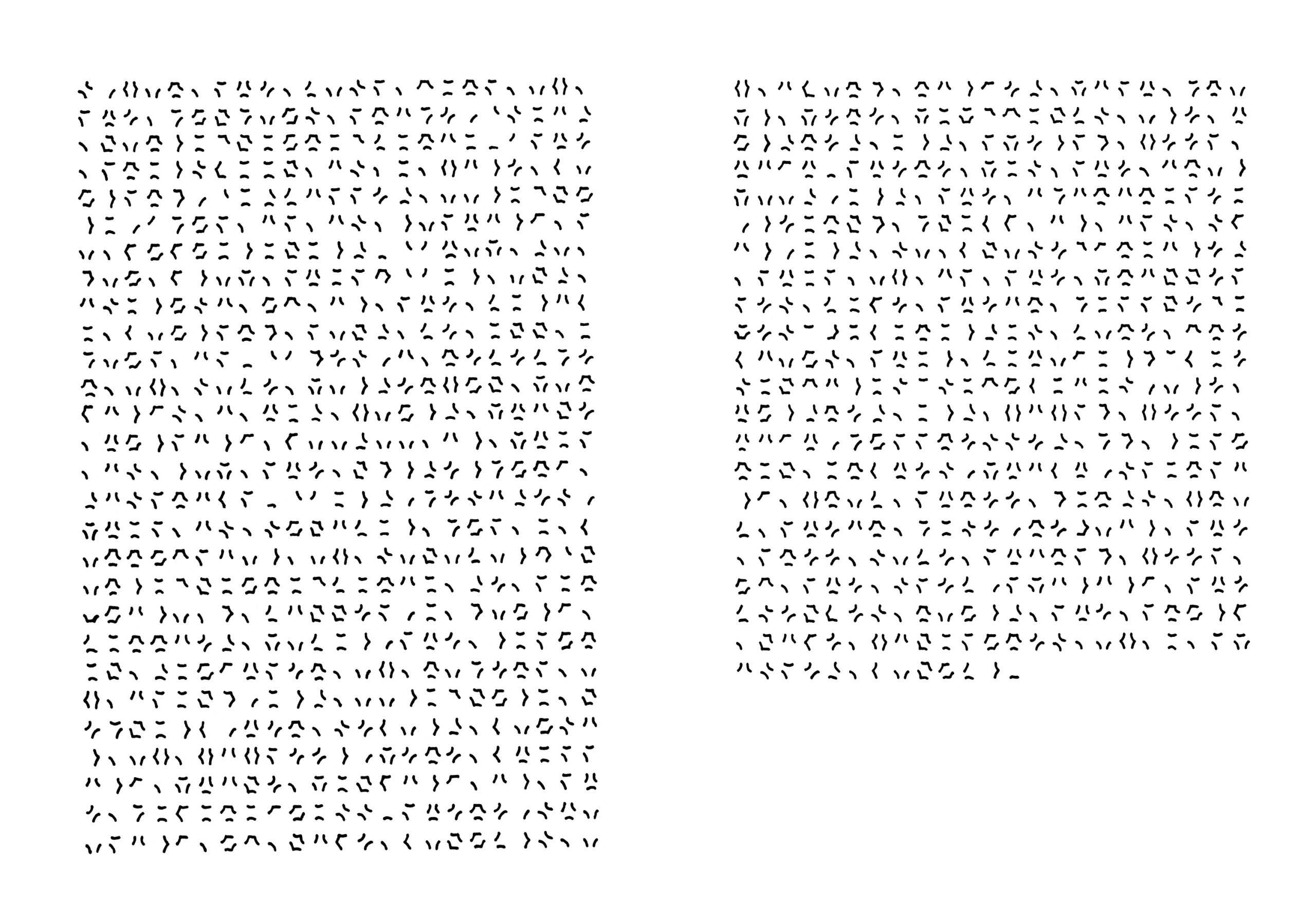
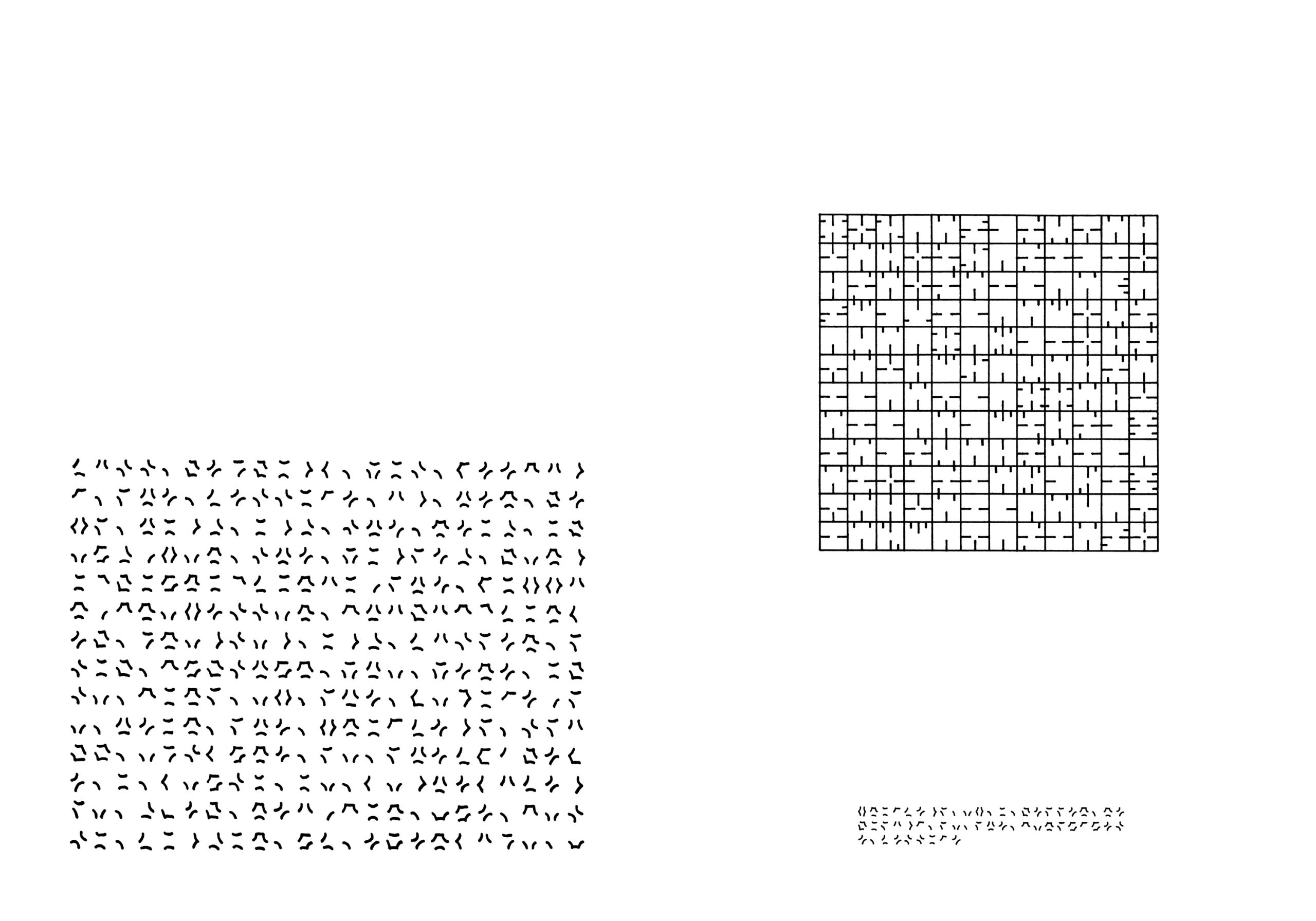
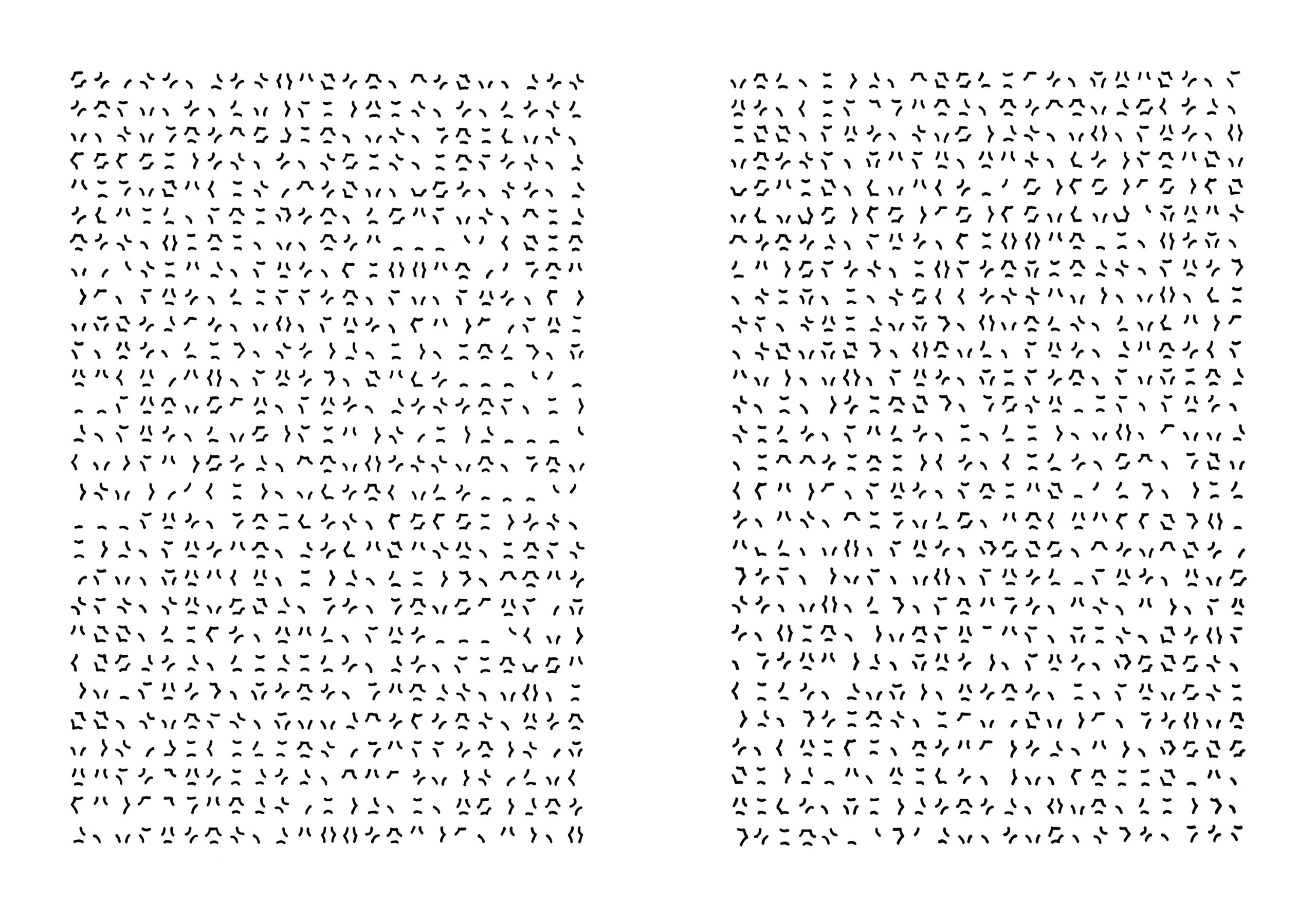
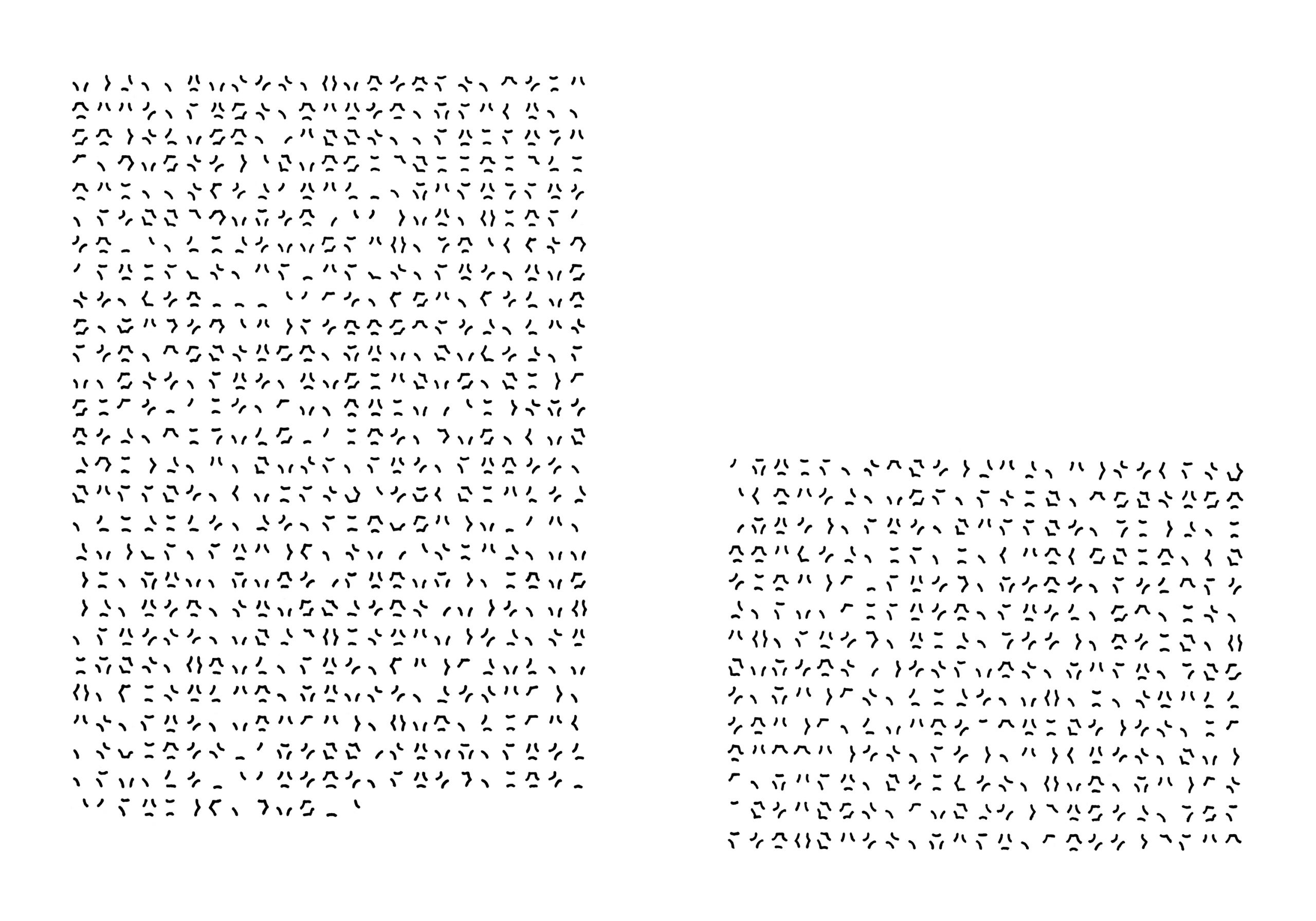
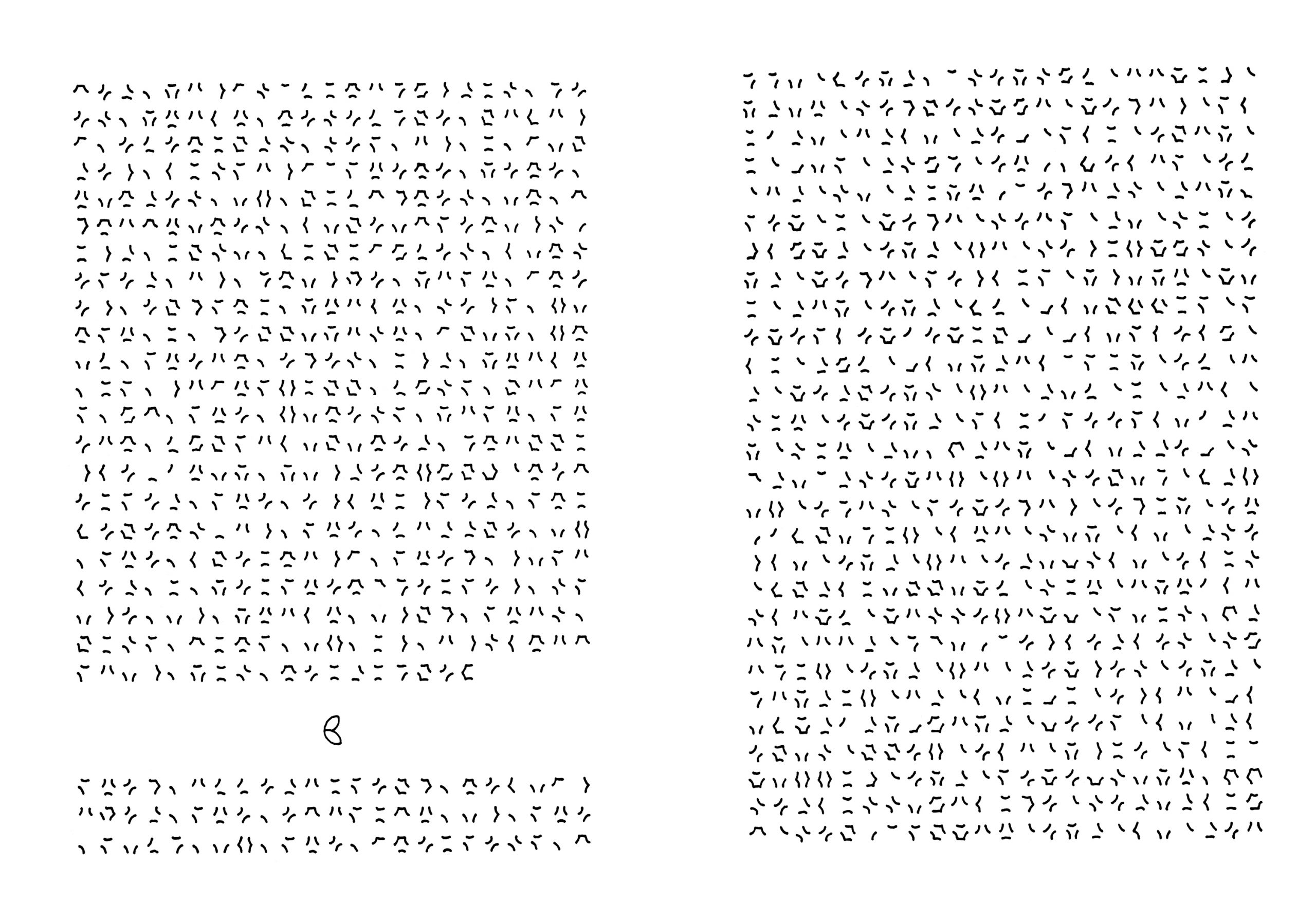
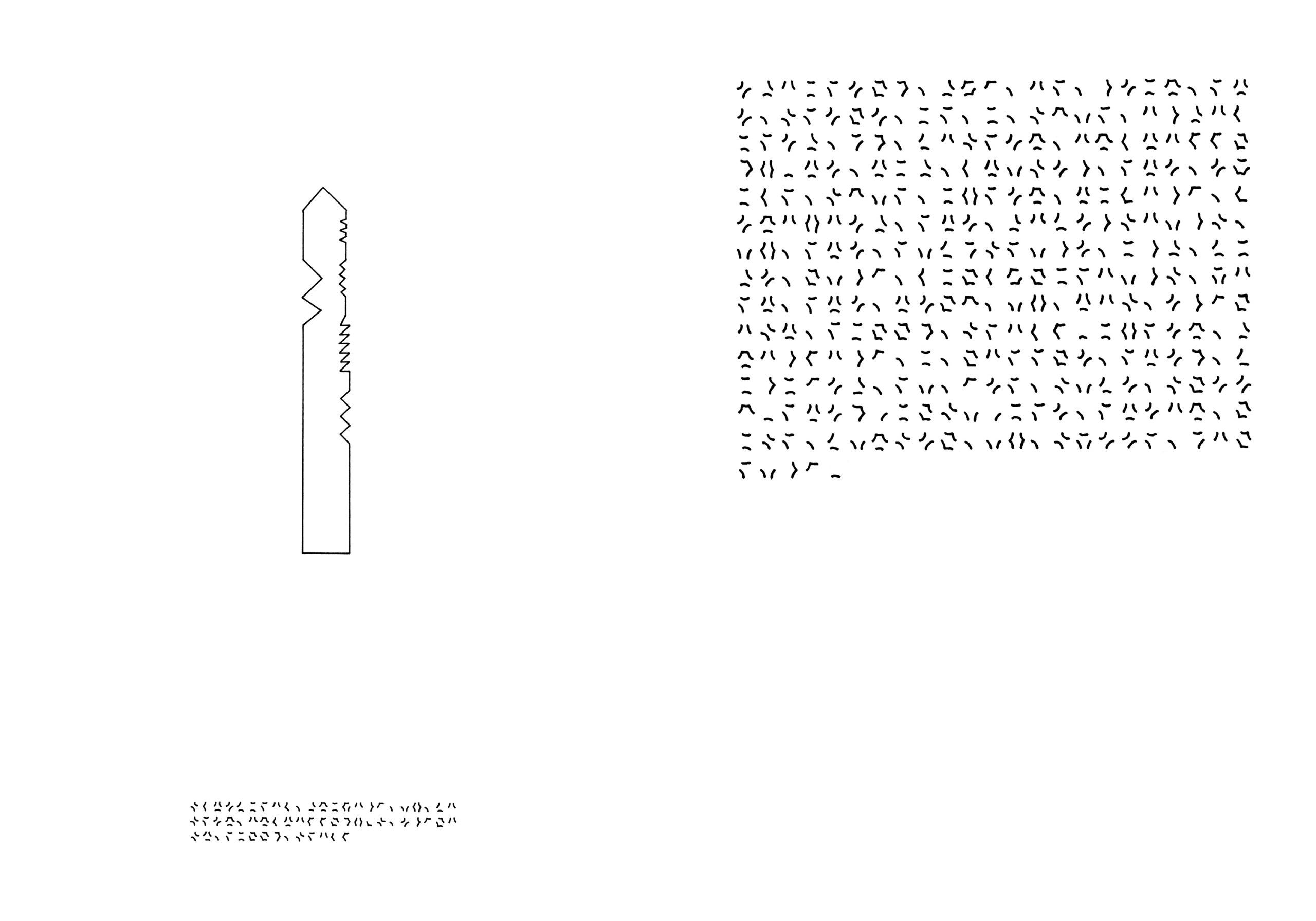
Originally self-published by Guy de Cointet in 1972, A Captain from Portugal is a short novel composed of the artist’s own coded letterforms. Written in a hand-drawn, polygonal typeface, this artist book retains the formal logic of a standard paperback—including section breaks, illustrations, and captions—that begs to be read like any other book. However, instead of standard literary fare, Cointet delivers a series of encrypted texts, the meaning of which is never disclosed. Rather than alienating the reader, these texts pull them in through delicately arranged patterns, which at times create a moiré effect on the page. Complementing these writings are additional boxlike codes, a short song presented in staff notation, and several illustrations, a few of which point to the artist’s jagged, triangular drawings of the early 1980s.
Emerging out of the language-driven turn in the visual arts of the late 1960s, A Captain from Portugal, like much of Cointet’s work, simultaneously employs and obfuscates the logic of conceptual art and the textual systems at its core. The work in A Captain from Portugal underscores the visuality of language while rupturing its linguistic meaning-making. While Cointet’s geometric forms allude to mediatic and machinic systems, they are hand-drawn, giving them a graceful energy that unsteadies the blocky visual form of writing on the page. No encryption key is provided by the artist and while it’s tempting to try to decrypt the text, perhaps we should abandon the goal of readability in favor of the visual and typographic beauty that Cointet has placed at the center of the book’s textual mysteries.
Guy de Cointet was born in Paris in 1934 and immigrated to New York in 1966. After hanging out briefly at Andy Warhol’s Factory, he began working as an assistant for sculptor Larry Bell, who lured him to Los Angeles a year later. In a city steeped in Minimalist practices he built up a body of work based on a theoretically simple medium: language. He first used his mother tongue, French, in opposition to the language of the country he was living in, and then the English he gleaned from what he heard around him—the press, advertising, and the TV soap operas he was a fan of. In 1971 he published his first work, ACRCIT: a veritable codex, a newspaper analyzing verbal structures. It was distributed for free at newsstands and later turned up as a prop in the artist’s stage works. That same year, Cointet also pursued his work on an alphabet at once innovative and imaginary, intermingling typefaces, sources, and modes of presentation, and recreating sentences and grammatical and linguistic formulae. Equally influenced by linguist Ferdinand de Saussure and novelist Raymond Roussel, he developed systems in which language functioned at once as code and image.
50 Pages
5 x 7 inches
Paperback
September 2026
ISBN: 9798994638194
—
Managing Editor: Jules Spector
Designer: Rick Myers